
About 375 million years ago
The Water’s Edge
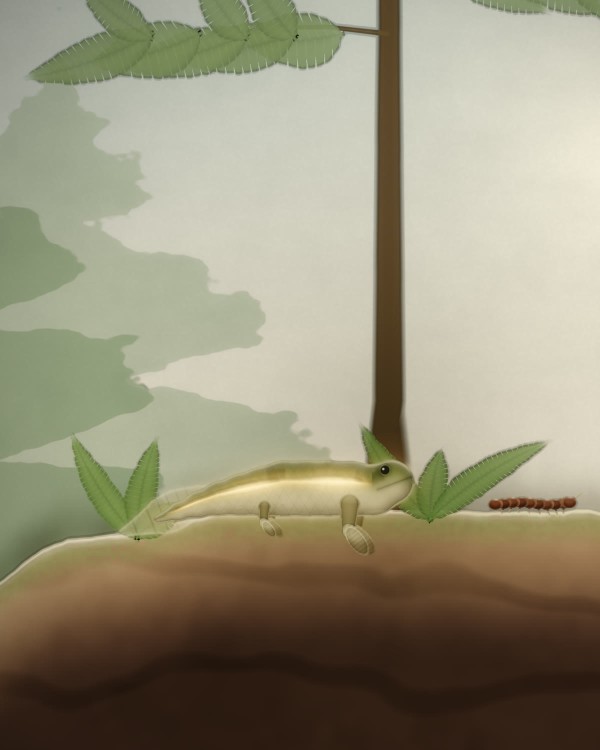
A lobe-finned fish with lungs and a neck, leaning on its fins in shallow water at the edge of the first forests.
In the game See it on the atlas
Between fin and limb
Tiktaalik roseae, found in Arctic Canada, has a mix of fish and tetrapod features that helped researchers understand the order in which four-limbed bodies were assembled. It stands in for the “fishapod” stage our ancestors passed through.
What the evidence shows
- Tiktaalik had scales, fin rays and a fish-like jaw, alongside a shortened skull roof, a mobile neck and a functional wrist joint.
- The rocks it came from suggest life in shallow, marginal waters, sometimes exposed to air.
- Trackways from Poland, about 18 million years older than the oldest tetrapod body fossils, suggest limbed animals already existed before Tiktaalik. Their interpretation has been debated.
What this means
- If those trackways are right, Tiktaalik was a late-surviving relative showing the body plan, not the first animal to take the step.
Sources
What it supports: Tiktaalik’s mix of fish and tetrapod features, including a mobile neck and a functional wrist joint, and a setting of shallow, marginal waters. It does not show how far the animal travelled on land.
What it supports: Trackways that suggest limbed animals existed millions of years before Tiktaalik. Their interpretation has been debated.
Summaries here are our own. Some publishers limit access to full papers; learning on this site is never paywalled.