
Perhaps a billion years ago
Between the Grains
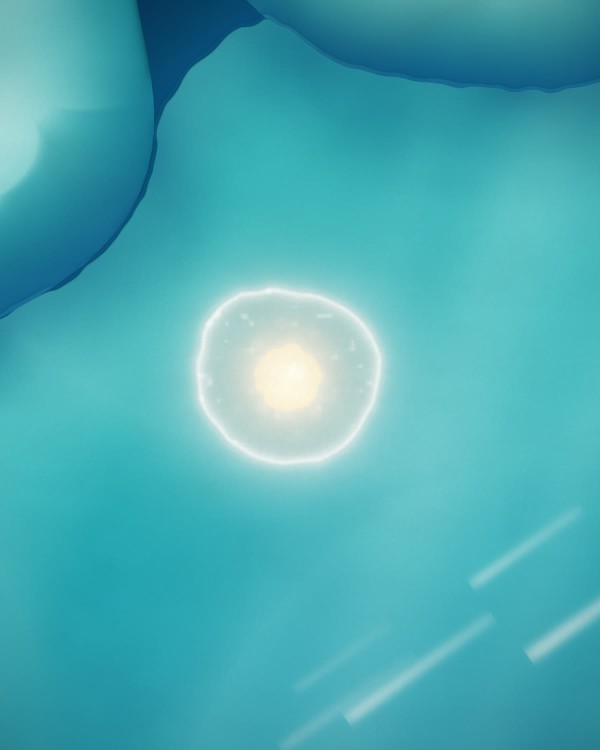
A single cell with a nucleus, hunting and hiding in the film of water between grains of sand. By then, life was already ancient.
In the game See it on the atlas
An old world already
A billion years ago, life had been changing the planet for billions of years. Microbes dominated the seas, and oxygen made by photosynthesising microbes had long been building up in the air. The cell in this era is a eukaryote: a cell with a nucleus, on the branch that would later lead to animals and fungi.
It was not alone in being complex. Large, regularly shaped multicellular fossils from North China are about 1.56 billion years old, so some organisms had already grown big enough to see.
What the evidence shows
- The closest living single-celled relatives of animals are the choanoflagellates. Their genomes carry genes for cell adhesion and signalling that were once thought to belong only to animals.
- Tidal layers in rock show that about 620 million years ago a year held roughly 400 days. Earth spun faster, so days were shorter, and in this older world shorter still.
What is reconstructed
- Choanoflagellates are living cousins, not unchanged ancestors. They help researchers reason about what our single-celled ancestors could do.
- The exact organism, place and date are a deliberate reconstruction. “A billion years ago” is an approximate setting.
Sources
What it supports: Large, regularly shaped multicellular fossils about 1.56 billion years old. Their place in the tree of life is uncertain, and they are not animals.
What it supports: Choanoflagellates, the closest living relatives of animals, carry genes for cell adhesion and signalling that were once thought to be unique to animals. They are living cousins, not unchanged ancestors.
What it supports: Tidal layers in rock recording that, about 620 million years ago, a year held roughly 400 days, so each day was shorter than today.
Summaries here are our own. Some publishers limit access to full papers; learning on this site is never paywalled.